As a sintered refractory supplier, I get this question at least once a week from current clients, potential partners, and even other industry professionals: Can sintered refractory be recycled? Before I stepped into this role seven years ago, I’d assumed the answer was a flat no—after all, these materials are designed to withstand extreme heat, thermal shock, and harsh chemical corrosion, traits that make them seem unfit for second life. But over the years, I’ve worked through dozens of trial runs, partnered with material scientists, and navigated the messy, often overlooked process of recycling sintered refractories, and the truth is far more nuanced than I ever expected. Sintered Refractory
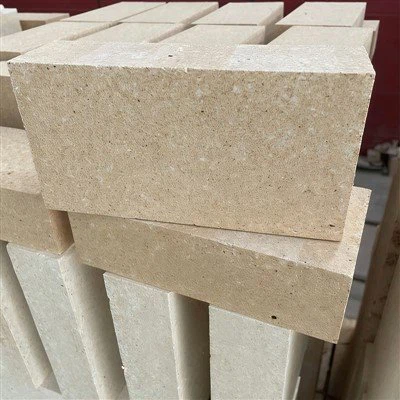
First, let’s ground this in what sintered refractories actually are, because that’s where the confusion starts. Unlike monolithic refractories (castable, rammable, or gunned mixes that are shaped and cured on-site), sintered refractories are manufactured by pressing raw mineral powders—usually alumina, magnesia, silica, or a mix of these—into uniform shapes (bricks, blocks, custom geometries) and firing them at temperatures between 1,500°C and 1,800°C. That firing process fuses the particles into a dense, rigid structure, which is why they’re the go-to lining for high-heat environments like steel furnaces, cement kilns, and non-ferrous metal smelters. But that same dense, fused structure makes recycling tricky: the heat exposure they endure during their service life only adds more stable phases, so they don’t break down easily like, say, a glass bottle or a steel beam.
Early on, I watched a client in the steel industry haul 20 tons of used sintered alumina-magnesia bricks to a landfill because they didn’t know what else to do. That moment stuck with me—we were sending perfectly functional material to waste, all because there was no clear pathway. Back then, the only options were reprocessing for low-grade applications or discarding, but today, that’s shifted. Let’s break down the two main paths we’re exploring at our facility, because they’re not one-size-fits-all.
The first, and most established, path is “post-consumer recycling” of intact or minimally degraded sintered refractories. Wait—intact? I know, that sounds counterintuitive. But when a refractory lining is removed from a furnace, it’s not always completely worn out. We recently worked with a cement plant that was upgrading their kiln lining; they removed 15 tons of magnesia-chrome bricks that had less than 10% wear on their hot face (the side that touches the kiln’s material). We cleaned those bricks with a high-pressure water jet to remove kiln dust and residual clinker, then tested their density and hot compressive strength. They met our internal specs for our mid-grade sintered brick line, so we re-tempered the outer surface (which had only minor thermal degradation) and added them to our inventory for applications in lower-heat kiln sections. That’s not a new idea, but it’s one most people don’t hear about: up to 30% of sintered refractories removed from service are still structurally sound enough to be re-used, not just crushed. The key here is sorting: we work with demolition crews to mark bricks by their original composition and wear level, which cuts down on testing time and waste.
The second path, and the one that’s had the biggest impact on our sustainability goals, is crushing and reprocessing used sintered refractories into “recycled aggregate” for new sintered products. This is where most of the innovation has happened in the last five years. Let’s be clear: we can’t melt down sintered bricks and re-shape them, because their firing temperature is already higher than the melting point of most refractory raw materials. Instead, we crush used bricks into a consistent granular size, mill it into powder, and blend it with virgin raw materials in specific ratios. For example, a used alumina brick that’s 92% alumina can be added at up to 40% to a new 92% alumina brick mix, reducing virgin material use and cutting the energy needed for production—since recycling the aggregate takes less energy than mining and processing bauxite, our main alumina source.
But there’s a catch here: contamination. Used sintered refractories are often coated with slag, metal oxides, or other debris from their service life. If that contamination is too high, it weakens the final product. A few years ago, we tried to use 100% recycled magnesia-chrome bricks in a test batch; the slag left on the bricks introduced too much silica, which caused the new product to crack under thermal shock. We fixed that by investing in a magnetic separator and a heavy media tank to separate pure refractory particles from slag, metal, and other impurities. Now, our process removes 98% of external contamination before reprocessing, so we can reliably use up to 50% recycled material in most of our standard sintered brick lines.
Of course, not all sintered refractories are equal. The ones used in steel furnaces, for example, are high-purity alumina-magnesia or magnesia-chrome, which are easier to recycle than lower-grade silica refractories. Silica refractories, which are used in glass furnaces, are more prone to phase changes during service that make reprocessing harder, so they’re typically only used in low-grade refractory castables after crushing. Then there are specialty refractories, like those with zirconia or other rare earth additives—those are still a work in progress, because the cost of sorting and purifying them outweighs the value of the recycled material right now.
I’ve had skeptics, too. A client once told me, “Recycled refractories are just second-rate products that will fail before their warranty is up.” To address that, we started third-party testing every batch of bricks made with recycled material, comparing their performance to 100% virgin bricks. In two years of field trials, the recycled bricks have held up just as long as virgin ones in applications like cement kiln preheater sections and secondary steel ladles. We even worked with a automotive parts smelter last year to replace half their virgin bricks with our recycled blend; they reported no lining failures over a 12-month period, which is a win for everyone.
There’s also a bigger picture here: the refractory industry produces about 10 million tons of waste globally each year, according to the Refractory Manufacturers Association, and only 25% of that is currently recycled. That’s a problem for both the environment and for our clients, who are facing stricter waste disposal regulations in places like the EU and the U.S. Many of our clients aren’t just looking to cut costs—they’re looking to meet sustainability targets, reduce their carbon footprint, and avoid landfill fees that have gone up 30% in the last three years alone.
But recycling sintered refractories isn’t without its challenges. The biggest one right now is collection and logistics. Used bricks are heavy, often scattered across multiple job sites, and require careful handling to avoid breaking during removal and transport. We can’t just send a truck to pick up a few tons from a small plant; we need bulk collection agreements with regional demolition companies, which is why we’ve partnered with three local refractory demolition firms to create a closed-loop system for our clients in the Midwest. Another challenge is product standardization: there’s no global standard for recycled refractory content, so some clients are hesitant to specify a product that doesn’t have a clear industry track record. That’s something we’re working on with industry groups to change, but in the meantime, we’re transparent about our process—we share test data, field trial reports, and even let clients visit our recycling facility to see how we process the material.
So, to circle back to the original question: Can sintered refractory be recycled? The short answer is yes, but not in the way you might think. It’s not the same as recycling aluminum cans or plastic bottles, where you can toss a used item into a bin and get a new one. It requires sorting, testing, and careful processing, but it’s a viable, scalable solution that’s only getting better as technology improves.

If you’re a current client looking to reduce waste from your refractory linings, or a potential partner interested in sourcing sustainable sintered refractories, let’s talk. We can walk you through our recycling process, share our performance data, and tailor a solution that fits your operational needs and sustainability goals. Don’t let your used refractories end up in a landfill—let’s turn them into a valuable part of your next lining project.
Monolithic Refractories References:
- Refractory Manufacturers Association (RMA). 2023 Global Refractory Waste Report.
- International Energy Agency (IEA). 2022 Energy Efficiency Improvements in Refractory Manufacturing.
- Journal of the European Ceramic Society. 2021: “Recycling Pathways for Magnesia-Based Sintered Refractories.”
- U.S. Environmental Protection Agency (EPA). 2023 Industrial Waste Reduction Guide for High-Temperature Industries.
Zhengzhou Dezhong Corundum Materials Co., Ltd.
We are one of the most professional sintered refractory manufacturers and suppliers in China, specialized in providing high quality customized service for global clients. We warmly welcome you to buy high-grade sintered refractory made in China here from our factory.
Address: Yuhuangmiao Village, Goutang Town, Xinmi City, Henan Province
E-mail: 443131771@qq.com
WebSite: https://www.dzrefactory.com/
