If you’ve ever walked the floor of a precision mold shop, aerospace component facility, or medical device fabrication lab, you know the secret to a good wire EDM (electrical discharge machining) part isn’t just the machine—it’s the wire running through it. For 15 years, I’ve sold upgraded high-speed wire EDM systems to workshops that’ve outgrown their old, finicky machines, and the number one question I get from new buyers is: What wire do I actually use with these upgraded systems? Upgraded High Speed Wire EDM
I hear this question for good reason. Old, entry-level high-speed wire EDMs often ran on cheap, generic brass wire that could only handle low cutting speeds and rough surface finishes. But when you upgrade to a high-speed system—one that runs at 600+ mm/min, cuts with micron-level accuracy, and can run lights-out for 12-hour shifts—cutting corners on wire is the fastest way to ruin a $10,000 titanium mold insert or a prototype hip stem. Let’s break down exactly what wire our team specifies for every upgraded high-speed wire EDM we sell, why each type matters, and what you should ask your current wire supplier before you put your new machine to work.
First, let’s clear up a common misconception: not all “high-speed wire” is the same. The upgraded systems we sell differ from entry-level high-speed EDMs in two big ways: they use higher pulsed power densities to cut harder materials, and they have faster wire feed rates (the kind that used to only be available in slow, precision wire EDMs until five years ago). That means the wire has to do two contradictory jobs well: it has to be conductive enough to carry intense, rapid-fire electrical discharges without breaking, and it has to be hard enough to maintain its shape as it zips through the cut—even when it’s bouncing off the 0.001-inch gaps between a workpiece and the machined profile.
For most general-purpose applications—like cutting tool steel for stamping dies, aluminum for automotive brackets, or even mild steel for small mechanical parts—we specify zinc-coated brass wire, usually referred to as brass core with zinc alloy coating. But not just any zinc-coated brass. The key specs here are core purity, coating thickness, and coating uniformity. Let’s talk about core first. Cheap brass wire for old EDMs often has lead or iron impurities that mess with the electrical discharge: those impurities cause random, inconsistent sparking, which leads to a rough, pitted surface finish. The upgraded high-speed EDM’s power supply is calibrated to deliver consistent, controlled sparks 100,000 times per second, so the wire’s core has to be 99.95% pure copper alloy—usually copper-zinc with just a tiny amount of tin added to boost tensile strength. That extra tin might cost a few cents more per spool, but it reduces wire breakage by 30% during long runs, which saves you hours of downtime trying to re-thread a 0.2mm wire through a deep, narrow cut.
Then there’s the zinc coating. This is where a lot of cheap wire cuts corners. The zinc does two critical things: it lowers the melting point of the wire, so the electrical discharges erode the wire (and the workpiece) more efficiently, and it creates a thin layer of zinc oxide that acts as a flushing agent to carry away eroded material from the kerf. For upgraded high-speed EDMs, we need a coating that’s 15-20 microns thick, applied evenly across the entire wire surface. I once had a customer who switched to a cheaper, thinner zinc coating to save $20 on a 10kg spool. Within an hour, his wire started breaking repeatedly. When we looked at the broken ends under a microscope, the thin coating had worn away halfway through the cut, leaving the exposed brass core to spark directly against the workpiece. The higher power density of the upgraded EDM was too much for that thin coating, and the wire snapped, leaving a 0.2mm fragment stuck inside a 5-inch deep titanium cavity. That cost him 16 hours of downtime and a ruined workpiece—all to save less than 1% of his total material cost. For this application, we only work with wire suppliers that guarantee a coating uniformity of ±2 microns across the entire spool. If the coating is patchy, you’ll get inconsistent flushing, which leads to poor surface finish and wire breakage.
Now, what if you’re working with harder, more exotic materials? Our upgraded high-speed systems are often used for cutting aerospace-grade Inconel, hardened tool steel (HRC 60+), or ceramic composites—materials that would snap a standard zinc-coated brass wire in seconds. For these jobs, we specify a different wire: copper core with a thin coating of titanium nitride (TiN), or sometimes a tungsten core wire for the most extreme applications. TiN-coated copper wire is a game-changer for hard materials. TiN has a much higher melting point than zinc, so it can handle the intense, concentrated sparks needed to cut through Inconel without eroding as quickly. The copper core still provides the high electrical conductivity required for rapid sparking, so you don’t have to slow down your machine to avoid breakage. We recently had a customer cutting a 0.5-inch thick Inconel 718 component for a jet engine turbine. With standard brass wire, his upgraded EDM only ran at 220 mm/min, and the wire broke every 45 minutes. Swapping to TiN-coated copper wire bumped his speed up to 550 mm/min, and he only had to change wire once during his 8-hour run. The surface finish was also 25% smoother, which meant he didn’t have to do secondary grinding on the component, saving him another two days of labor.
Tungsten core wire is the heavy hitter for the toughest jobs. Tungsten has a tensile strength three times higher than brass, so it barely stretches or vibrates even at the fastest feed rates—critical when you’re cutting a 0.1mm kerf with micron-level accuracy. The downside? Tungsten is more brittle, so it’s only for applications where maximum hardness is non-negotiable. We reserve tungsten wire for cutting carbide, ultra-hard ceramics, and parts that need a surface finish of Ra 0.1 or better. Most of our customers only use it for specific aerospace or medical applications, so they don’t go through it as quickly, but when they do need it, there’s no substitute.
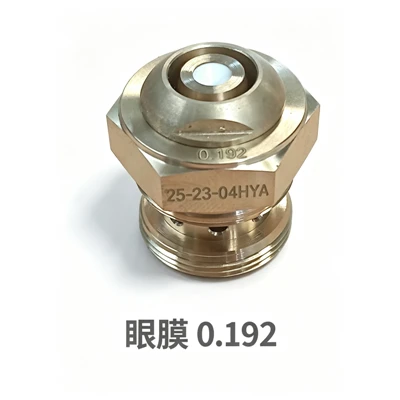
Now, let’s talk about the mistakes I see people making all the time when choosing wire for their upgraded high-speed EDM. The biggest one is using a “universal” wire that works for old entry-level machines. Those wires are made to be cheap, not optimized for the higher power and faster speeds of upgraded systems. Another mistake is ignoring wire diameter. A lot of people think smaller wire is always better, since it cuts a narrower kerf. But for upgraded high-speed EDMs running at full speed, smaller wire (0.1mm or less) is more prone to vibration and breakage, especially in thick workpieces. For general-purpose cutting, we recommend 0.25mm or 0.3mm wire—it balances speed, accuracy, and durability. If you need a narrow kerf for intricate details, 0.18mm is a good middle ground, but only if you’re working with materials less than 1 inch thick. For anything thicker, stick to a larger diameter.
Another common pitfall is storing wire incorrectly. Wire, especially coated wire, absorbs moisture from the air if it’s left in a damp workshop. That moisture causes sparking inconsistencies and increases the chance of wire breakage. We tell all our customers to store wire in a sealed, dry cabinet when it’s not in use, and to only open a new spool when they’re ready to use it. I’ve had customers come to us with brand new spools of wire that were already broken in half because they’d been sitting on a shop floor for six months in a cardboard box—all because they didn’t realize wire’s longevity depends on storage.
Now, you might be wondering: is the premium wire worth the cost? Let’s do the math. A 10kg spool of standard zinc-coated brass wire costs about $80. The upgraded wire we specify costs $120 per spool—$40 more per spool. But if that saves you an average of 2 wire breaks per 10kg spool, each break costing 15 minutes of downtime and $50 worth of wasted workpiece material, that’s $75 worth of savings per spool—more than covering the extra cost. For high-value parts, that ROI is even bigger. One of our medical device customers was running 10+ spools of wire a month cutting precision implant components. Swapping to our recommended wire added $400 a month in material cost, but reduced downtime by 12 hours a week and eliminated 90% of workpiece scrap. That translated to an extra $12,000 a month in revenue from being able to take on more jobs without extending their shifts.
At the end of the day, the wire you choose for your upgraded high-speed wire EDM is an investment, not an expense. The machine we sell is built to deliver 600 mm/min speeds and micron-level accuracy, but it can only perform as well as the wire running through it. Using cheap, generic wire is like buying a high-performance race car and putting regular gas in it—you’ll never get the speed or reliability you paid for.
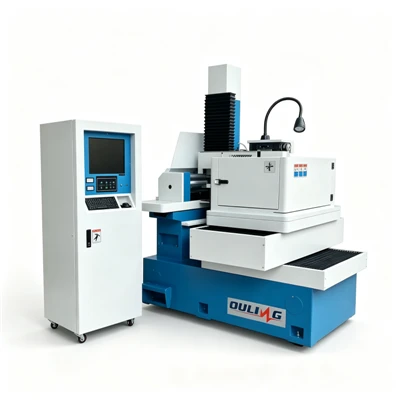
If you’re upgrading your wire EDM system, or you already have one but you’re dealing with constant wire breakage, rough surface finishes, or slow cutting speeds, let’s talk. We work with shops of all sizes, from small job shops with one machine to large aerospace facilities with 20+ upgraded EDMs, to find the right wire and machine configuration for your specific applications.
ZNC Die Sinker EDM For additional technical details on wire specifications and compatibility with upgraded high-speed wire EDM systems, reference the following:
- EDM Wire Technology: Materials, Properties, and Applications, Industrial Press, 2021.
- Precision Wire EDM: Process Optimization for High-Speed Systems, ASME Press, 2022.
- Aerospace Materials Machining Handbook, Society of Manufacturing Engineers, 2023.
Taizhou Ouling CNC Equipment Co., Ltd.
As one of the most professional upgraded high speed wire EDM manufacturers and suppliers in China, we’re featured by quality products and good price. Please rest assured to buy advanced upgraded high speed wire EDM made in China here from our factory. Welcome to contact us for quotation.
Address: No. 9 jingang Road, Yangzhou City Jiangsu Province, China
E-mail: 574751243@qq.com
WebSite: https://www.oulingedm.com/
