Yo, what’s up everyone! I’m a supplier in the cable industry, and I’ve been dealing with paper for cable use for quite some time. One question that often pops up is: Can paper be used for both power cables and communication cables in the cable industry? Well, let’s dive right into it and see what’s what. Paper for The Cable Industry
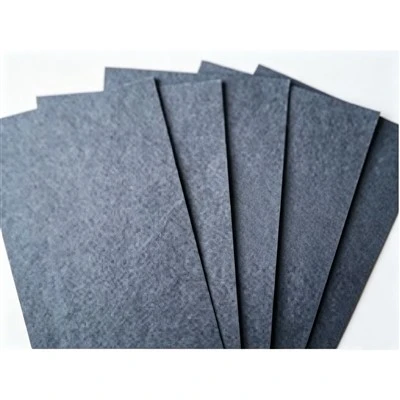
First off, let’s talk a bit about the basics of power cables and communication cables. Power cables are all about transmitting electrical energy. They’re used to carry high – voltage electricity from power plants to our homes and businesses. Communication cables, on the other hand, are used to transfer data, like phone calls, internet signals, and TV broadcasts. They need to ensure accurate and fast data transfer with as little interference as possible.
The Use of Paper in Power Cables
Paper has a long – standing history in the power cable industry. Back in the day, when cable technology was just starting to develop, paper was one of the first materials used as an insulator for power cables. Why? Well, paper has some pretty cool properties that make it suitable for this job.
One of the main advantages of paper in power cables is its electrical insulation capabilities. Electrical insulation is crucial in power cables to prevent the leakage of electricity and to ensure the safe transmission of high – voltage currents. Paper provides a good level of insulation, especially when it’s properly treated.
Another benefit is its mechanical strength. Power cables need to be able to withstand a certain amount of physical stress, like bending and stretching during installation. Paper can offer enough mechanical support to keep the cable in one piece.
However, there are also some drawbacks. Paper is hygroscopic, which means it attracts and holds water. Moisture can significantly reduce the insulation properties of paper, making the cable more prone to electrical failures. That’s why in modern power cables, especially those designed for harsh environments, paper is often combined with other materials, like plastics or oils, to improve its moisture resistance.
Despite these challenges, paper still has its place in power cables. For example, in some low – voltage and medium – voltage power cables, paper can still be a cost – effective and reliable insulation material. It’s also used in some special – purpose power cables where the environmental conditions are relatively stable and dry.
The Use of Paper in Communication Cables
Now, let’s shift our focus to communication cables. The requirements for communication cables are quite different from power cables. As I mentioned earlier, they need to ensure accurate and fast data transfer.
Paper has some potential applications in communication cables as well. One of the key things in communication cables is the reduction of electromagnetic interference (EMI). Paper can act as a kind of shielding material to some extent. It can help to block or reduce the unwanted electromagnetic signals that could interfere with the data being transmitted.
But again, there are limitations. In today’s high – speed communication era, the demand for data transfer rate is extremely high. Paper’s electrical properties may not be able to meet the requirements of very high – frequency signals. For example, the dielectric constant of paper can change with frequency, which can lead to signal distortion at high frequencies.
Another aspect is the size and weight. Communication cables are often required to be as small and lightweight as possible, especially for applications like mobile devices and in – building wiring. Paper may add unnecessary bulk and weight compared to some modern plastic – based insulation materials.
However, in some low – speed communication systems, such as old – fashioned local area networks or some simple telecommunication lines in rural areas, paper can still be a viable option. It’s relatively cheap and easy to work with, which can be an advantage in cost – sensitive projects.
The Viability of Using Paper for Both
So, can paper really be used for both power cables and communication cables? The answer is yes and no.
Paper has the potential to be used in both types of cables, but it requires different treatment and combination with other materials depending on the specific application. In power cables, we need to focus on improving its moisture resistance and maintaining its insulation properties under high – voltage conditions. In communication cables, we need to find ways to minimize its impact on signal quality at high frequencies.
From a cost – benefit perspective, paper can be a great choice for some low – end and medium – end cable applications in both power and communication sectors. It’s generally less expensive than many high – tech insulation materials, which can be a significant advantage for budget – conscious customers.
However, for high – end applications, such as ultra – high – voltage power transmission lines or high – speed fiber – optic communication networks, paper alone may not be sufficient. In these cases, more advanced materials are needed to meet the strict performance requirements.
My Experience as a Supplier
As a paper supplier for the cable industry, I’ve seen firsthand the different needs and challenges of my customers. Some are looking for a cost – effective solution for their low – voltage power cables, and they’re quite happy with the performance of our treated paper. Others are exploring the use of paper in their communication cables for some niche applications, and they’re constantly asking for ways to improve its properties.
I’ve also noticed that the market is becoming more diverse. There’s a growing demand for eco – friendly materials in the cable industry, and paper fits the bill well. It’s a renewable resource, and compared to some plastics, it has a lower environmental impact.
Conclusion
In conclusion, paper can be used for both power cables and communication cables, but its use depends on the specific requirements of the application. For some low – and medium – end cable projects, it can be a great choice due to its cost – effectiveness and certain beneficial properties. In high – end applications, it may need to be combined with other materials.
If you’re in the cable industry and are thinking about using paper in your cables, whether it’s for power or communication purposes, I’d love to have a chat with you. I can share my knowledge and experience, and we can work together to find the best paper solution for your needs. Reach out to me to start a procurement discussion and see how we can make your cable projects even better.
Mulch Film Paper References
- "Cable Engineering Handbook"
- "The Basics of Electrical Insulation Materials"
Shanghai Rongying Industrial Co., Ltd.
As one of the most professional paper for the cable industry manufacturers and suppliers in China, we’re featured by quality products and good price. Please rest assured to wholesale customized paper for the cable industry from our factory. If you have any enquiry about quotation and free sample, please feel free to email us.
Address: Jiahua Business Center C building 204 room, No.808 Hongqiao Road,Xuhui District,Shanghai,China
E-mail: info@shryspecialtypaper.com
WebSite: https://www.woolpaper.com/
