Alright, let’s cut to the chase: if you’re working with a 36M Truck Mounted Aerial Work Platform (let’s just call it a 36M TMAWP to save everyone’s fingers), you don’t need a fancy science project to get the job done—you need a communication system that works when you’re 120 feet in the air, on a crowded jobsite, with trucks beeping, cranes rumbling, and your crew yelling over the wind. As someone who’s been supplying these bad boys for years, I’ve seen it all: guys trying to shout over a jackhammer, radios cutting out mid-lift, even a close call because the operator didn’t hear the ground crew warning them about a power line. So today, I’m breaking down exactly what that comms system is, why it’s non-negotiable, and why it’s not just a “nice-to-have” for your 36M lift—it’s what keeps you all alive. 36M Truck Mounted Aerial Work Platform
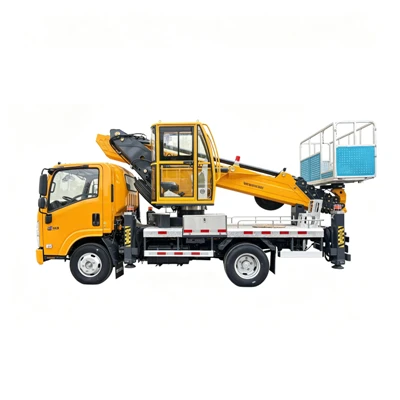
First, let’s get one thing straight: a 36M TMAWP isn’t a scissor lift. It’s a truck with a telescopic boom that can reach 118+ feet, with a basket (called a “work platform” or “cherry picker basket,” but let’s be real, we call it the basket) that holds 2-4 guys, tools, and maybe a few coffee thermoses. The distance between the basket and the truck’s base—plus all the noise on a typical construction site—means regular walkie-talkies? They’re garbage. I’ve tested cheap GMRS radios on these lifts, and the second the boom extends past 80 feet, the signal fizzles like a soda left in the sun. So the comms system on a 36M TMAWP is purpose-built for this exact scenario. Let’s dive into the core parts, no jargon overload.
The brain of the operation here is the intercom system, and it’s two-way: basket-to-truck, and truck-to-basket. Wait, actually, it’s three-way? No, no—wait, let’s clarify. The basket has the operator (sometimes called the “aerial operator”) who’s actually moving the boom, and a ground crew member (usually a signal person, per OSHA, but we’ll get to that) down by the truck. The intercom links both. But here’s the key: it’s wired? No, most modern 36M TMAs have wireless intercoms, but they’re not the same as your personal AirPods. They use a frequency that doesn’t get blocked by the steel boom or the truck’s frame—something in the UHF band, specifically tuned for industrial equipment. I remember when we switched from old wired intercoms to wireless a few years back, the guys on site stopped complaining about tripping over cables between the basket and truck. Game changer.
But wait, what about the other guys on site? Like the crane operator across the street, or the foreman who’s calling about a part? That’s where the secondary comms layer comes in: the site radio integration. Every 36M TMAWP we supply has a dedicated channel for the operator to plug into the site’s existing two-way radio system. Why? Because if you’re 120 feet up and the foreman says “hold lift 10 minutes, we’re moving a stack of steel,” you don’t want to miss that. And here’s a trick we’ve added to our units: a separate speaker for the site radio, so it doesn’t mix with the basket-truck intercom. No more yelling over two conversations at once.
Now, let’s talk about the physical gear in the basket, because that’s what the operator is actually using. You can’t just hold a radio and control a 36-foot boom. No, we outfit every basket with a headset: over-ear, noise-canceling, but not too heavy that you forget you’re wearing it when you’re reaching for a rivet gun. Wait, noise-canceling, but not too much—you still need to hear if someone’s yelling “watch your head!” next to you. It’s a balance. The headset connects to a control panel in the basket, which has big, easy-press buttons: one to switch between intercom and site radio, one to mute if you’re talking to a buddy in the basket, and a big red emergency button. Oh right, the emergency function! That’s non-negotiable. If the boom gets stuck, or someone has a medical issue, pressing that button sends a direct alert to the truck’s cab, plus it triggers a loud horn on the truck and a flashing light, so the ground crew knows something’s wrong immediately. No fumbling for radios, no static.
And don’t sleep on the truck cab side. The ground crew (usually two people: a signal person and a spotter) has their own headsets and a display that shows who’s talking—basket, ground, or site radio. The cab’s intercom system also has a volume control that syncs with the basket’s height? Wait, is that a thing? Yeah, we added that a couple years ago. When the boom goes up 100 feet, the wind noise picks up, so the volume on the basket headset automatically cranks up a little, and vice versa when you come down. It’s a small touch, but it makes all the difference on a windy day when you’re trying to hear over a 20mph gust.
Now, let’s get real about why this isn’t just a toy. OSHA has strict rules for aerial work platforms, right? Any lift over 30 feet needs a dedicated communication system between the basket operator and ground crew. But 36M is almost 120 feet—way above that threshold. I’ve seen a contractor skip upgrading the comms on their old 35M lift, and last year, the operator didn’t hear the signal person warning them about a power line. They clipped it, fried the electronics, and the whole boom locked up. Thank god no one got hurt, but it cost them $50k in repairs and a week of downtime. That’s why every 36M TMAWP we sell comes with a certified comms system that meets OSHA standards, no extra charge. We don’t cut corners here, because we’ve seen what happens when you do.
Wait, but what about when jobsites are super crowded? Like downtown Chicago, where you’ve got a dozen lifts, cranes, and delivery trucks all working at the same time. Regular comms systems get interference left and right. That’s why the system we use has frequency-hopping tech—wait, but I don’t want to bore you with tech jargon. Let’s put it this way: it switches frequencies every few milliseconds so it doesn’t get crowded out by other radios. We tested it on a jobsite in Manhattan last year, and the operator was 130 feet up, surrounded by 15 other radios, and they never lost signal. Not once. That’s the kind of reliability you need for a 36M lift.
Another thing: accessories. You don’t just get the headsets and intercom. We add things like a Bluetooth adapter? Wait, no, industrial-grade, not consumer Bluetooth, because that drops out. We have a hardwired aux input if the operator needs to listen to a job audio feed, but mostly, it’s stuff like a backup voice recorder. Wait, yeah—some clients ask for that. If there’s an incident, they can go back and listen to the comms to figure out what went wrong. It’s a small add-on, but it’s saved a lot of our clients from arguing with insurance companies about who said what.
Now, let’s address the elephant in the room: could you use your phone for comms? No, and here’s why. Cell service on a lot of construction sites is garbage, especially if you’re in a downtown skyscraper zone where buildings block the signal. Even if you have 5 bars, a phone call can drop, and if you’re 120 feet up, you’re not carrying a phone while operating the boom. The comms system is integrated right into the lift’s controls, so you don’t have to fumble with your phone while you’re trying to steer the basket or adjust the boom’s angle. That’s a safety hazard waiting to happen. We’ve had clients try it, and they came right back to us for the real system after a week of dropped calls and missed warnings.
Let’s also talk about maintenance. This isn’t a set-it-and-forget-it system, right? The headsets get dropped, the cables get chewed on by job site critters, the wireless transmitter can get dirty. So when we supply a 36M TMAWP, we include a maintenance schedule for the comms system, and our service team is on call 24/7 if something breaks. Last winter, a contractor in Minnesota had their intercom die in the middle of a lift, and we had a tech out there in 3 hours, even in the snow. Because when you’re working in -20 weather, you can’t afford to be stuck 100 feet up, especially when the comms go out.
Wait, one more thing: training. A lot of guys think “oh, it’s just a radio, I can use it.” But using a 36M lift’s comms system isn’t like using a walkie-talkie at a concert. You need to use standard site signals, keep conversations short, only talk when it’s your turn (push-to-talk, remember? No yelling over each other). We provide free training with every unit, so the operator and ground crew know exactly how to use the comms, what each button does, and how to handle emergencies. I always tell clients: the best comms system in the world is useless if your crew doesn’t know how to use it.
Let me wrap this up. The communication system on a 36M Truck Mounted Aerial Work Platform isn’t just a bunch of wires and speakers. It’s the lifeline between the guy in the basket 100+ feet up and the crew keeping that lift safe on the ground. It’s built to work through wind, noise, crowded jobsites, and even harsh weather. It’s OSHA-compliant, reliable, and designed to keep your crew from making costly (and dangerous) mistakes.

If you’re in the market for a 36M TMAWP, don’t settle for a unit that skimps on the comms system. Ask for the industrial-grade intercom, the site radio integration, the emergency alert button, and the training that goes with it. We’ve been supplying these lifts for years, and we know exactly what works—because we’ve seen what doesn’t. Want to chat more about what our comms systems can do for your jobsite? Hit us up, and we can walk you through the specs, the maintenance, and why our units are the most reliable on the market.
References
Truck-Mounted Crane OSHA 29 CFR 1926.451, Safety Standards for Aerial Lifts
Terex Aerial Work Platforms, 2023 Technical Guide for Truck Mounted Lifts
Construction Equipment Association, 2022 Communication Systems for Industrial Lifts
Voyantek Intelligent Equipment Co., Ltd.
As one of the most professional 36m truck mounted aerial work platform manufacturers and suppliers in China, we’re featured by quality products and good service. Please rest assured to wholesale advanced 36m truck mounted aerial work platform from our factory. We also accept customized orders.
Address: No.1108, zhongde Plaza, Jining, Shandong, China
E-mail: cnepoch@163.com
WebSite: https://www.voyantek.com/
